For those of you who have been following along, you’re well aware that the process of registering non-BES IBR’s is well underway. We will see in the next couple quarters a lot of action happening as NERC and the regions begin the registration process. For those of you who aren’t GO/GOP, you haven’t been out of the limelight either. Last year you saw at least one data request asking you to identify any potential Category 2 generation in your footprint and submit any information to your regional entity. The initial question is, why? Why would NERC need this information if they have access to the EIA-860 database? This is because they do not have any of the direct contact information of the owners of the generation assets that meet the Category 2 generation. [1]
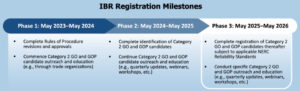
NERC and the industry is still working on determining the full list of standards that will be applicable to this new category of non-BES generation. Yes, I’ve now said twice already the phrase “non-BES generation”. How could that be? How can non-BES assets be included in the registry? There are examples of NERC including non-BES assets in a Standard. For example, when discussing UFLS systems, many UFLS systems are integrated at distribution level voltage levels well below the 100kV threshold of BES. “While UFLS and UVLS equipment are located on the distribution network, their job is to protect the Bulk Electric System. This is not beyond the scope of NERC’s Section 215 authority.”[3] In this situation, NERC is applying the same logic, these IBR resources are considered significant enough to have adverse effects on the BES if they are not following the standards that NERC will outline for them.
Some follow up questions that exist are, where do we stop from here? Is all generation, regardless of technology, greater than 20MVA nameplate, connected below 100kV, at risk of being registered? At this time, there is no movement to add any additional non-BES generation to the NERC registry. This is because the total amount of generation that matches the above threshold is not nearly as significant as IBR generation. Several years ago, when I was but a budding Operations and Planning Analyst, I was told that NERC was technologically agnostic. That standards were not allowed to discriminate towards any certain type of technology. This was in reference specifically to electromechanical relays vs microprocessor relays, digital AVR’s vs analog, etc… There are many standards written that were trying to avoid any sort of market advantage of having newer vs older equipment. I believe we can safely say we are entering an era where that is no longer the case.
Enter the next three newly drafted PRC standards which are in FERC’s hands to be approved: PRC-028, PRC-029 and PRC-030. These standards are going to separate applicability between IBR generation and non-IBR generation. Here is a quick rundown: